
A Comprehensive Buyer’s Guide To Choosing The Right Thread Plug Gauge
Threaded elements are an integral part of modern manufacturing processes. Automotive parts, construction fasteners and a range of equipment requires the right threaded holes to guarantee safety and operations.
If the hole is too tight, proper assembling becomes difficult, and if it’s too loose, it may result in misalignment, pressure leaks, and even complete product failure. Hence, it’s essential to evaluate the quality of screw threads, like diameter, pitch and type, before you use them.
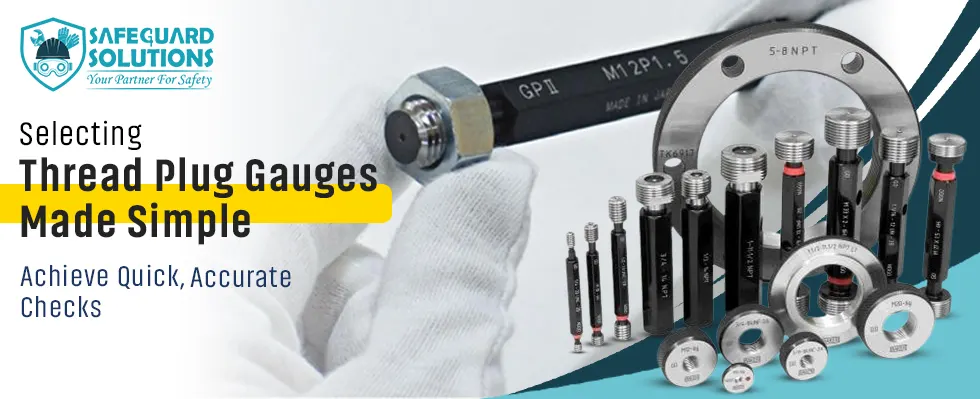
A thread plug gauge or nut thread checker, as it’s commonly known, is a reliable tool that helps determine the quality of screws. You can use it across multiple areas, from small workshops or large production units and inspection stations.
But there are several types of screw size measuring tools based on the area to measure, quality and application of the screws. Selecting the right one is essential to ensure safety, quality and maintain compliance.
This buyer’s guide will help you learn all about the types and purposes of the gauge, so you can pick the right one that meets your project requirements.
But first of all,
What Are The Different Types Of Thread Forms?
This is the first step towards selecting the right gauge. Understand the types of thread forms, so that you can identify your specific requirements for a gauge. Every industry has a different set of load requirements, sealing needs, or assembly conditions, for which they need the screws. The right tool to check thread size must be chosen based on the same.
The table below can give you a complete overview of key thread forms and their respective gauge types:
| Types Of Threads | Applications | Right Measuring Gauge |
|---|---|---|
| Metric threads | Consumer goods, automotive, machinery parts | Metric GO & NO GO, Metric fine thread for critical pitches |
| Whitworth Threads | Mechanical fittings of very old equipment | Medium Class GO & NO GO gauges |
| BA Threads | Electrical fittings, precise assemblies, instruments | BA plug gauges |
| BS Cycle Threads | Cycles, motorbikes and mechanical assemblies | BS Cycle plug gauges |
| Unified Threads | American machinery systems, industrial equipment, aerospace | Unified plug gauges in Class 2B or other configurations |
| Trapezoidal Threads | Heavy-duty, clumps, jacks and drives for motion control | Trapezoidal gauges for measuring pitch and flank angle |
| Taper Pipe Threads | Pipe and flow systems, pressure lines and other fluid handling systems | ISO 7 R taper plug gauge |
There are other kinds of threads, like ACME threads used in power transmission facilities, Buttress threads for oil plants and NPT and NPTF Tapered ones for sealed piping systems. All these products have dedicated gauges to measure and ensure safety, operation and compliance.
Now, let’s discuss the second factor that you should consider while buying the right thread measuring tool.
Common Types Of Gauges And Their Applications
There are two main types of thread measuring tools that you should know of:
- GO or NO GO - These gauges measure the minimum and maximum material conditions in manufacturing and production units respectively.
- Special thread gauges - These tools range from ACME and Stub ACME, Trapezoidal, NPT and ANPT to fine pitch gauges and ones for custom thread conditions.
Besides these, you may also need custom gauges with exceptional tolerances for specialised geometries.
Now what is the tolerance of a bolt thread checker?
The checking tools must always be more accurate than the threads they measure. This helps detect any deviation in the inspection stage itself. Understanding the tolerance of the thread system helps determine the type of gauge to be used.
- Metric threads generally have a 6H class tolerance
- Unified threads have Class 2B tolerance
- Whitworth thread forms have medium class tolerance
- NPT and NPTF threads feature ANSI standards of tolerance
When selecting a gauge, you should consider the specific tolerance class besides the thread forms to ensure accuracy and compliance.
The Material Choice For Thread Measuring Tools
Every measuring tool for screw sizes is constantly exposed to metal-to-metal contact, its sturdiness, stability and anti-corrosive properties are extremely important.
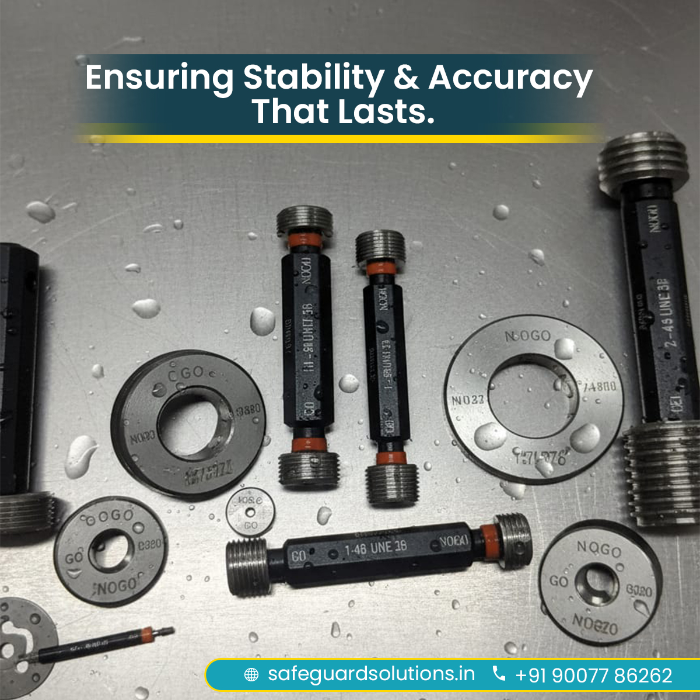
In the Safeguard Solutions collection, we offer gauges that maintain accuracy for a long period of time even after repeated use. Every plug gauge goes through NABL certified inspections before they are made available to you.
Precise Applications Of The Nut Thread Checker
The next thing to consider before buying thread plug gauges is its application. If you know where and why you will need the tool, selection becomes easier. The following questions will help you determine the right system for measuring screw sizes.
1. Any idea about the size of the threaded holes to be measured?
Check the diameter of the hole to be measured and choose a gauge accordingly. For example, our curation consists of tools ideal for 2 mm to 400 mm size thread holes. So whether you are measuring fine diameters in an electronic device or the larger screw holes in heavy machinery, we can provide an accuracy solution for you.
2. The type and pitch of the thread hole?
Is it a Metric or an NPT, Unified or BSP? What is the distance between the threads (pitch)?
These two crucial considerations can help you pick the right device to measure screw threads in any kind of unit. Refer to the drawing or specification sheet of the product, whose threads are to be measured. You’ll find the pitch written as something like “M10 x 1.5” for Metric threads. Unified ones have it as “1/4-20 UNC” mentioning the TPI (Threads per inch). The taper angles of pipe threads will have NPT, NPTF, or BSPT mentions.
3. What is the main purpose of the thread component?
When you have an idea of the purpose of the thread, you can select the measuring gauge with more clarity and precision. Does the element carry a heavy-duty load or it’s needed for sealing toxic fluids and gas? Further, you also need to consider if the part is exposed to vibrations or movements. Then there are parts that are constantly in motion.
Knowing the specific application is essential because different gauges are designed for different purposes. If a tool is meant to measure thread holes in a power transmission element, it cannot be used to inspect sealing elements.
Certification And Compliance Standards
These days, quality certification and compliance standards are required for every system, even a tool to check thread size to ensure 100% safety and operational efficiency. Some common standards that these gauges should comply with are ISO (applicable for metric threads), API (oil and gas), IS (Indian Standards), BS (British Standards).
At Safeguard Solutions, you’ll get thread plug gauges of all major types and standards to meet your precise measuring requirements.
The Final Suggestion
While buying a thread plug gauge, don’t consider its simple appearance and choose at random. Remember, every device used to measure screw threads play a critical role in overall assembly operation, safety and compliance.
We have given you a comprehensive overview of how to choose the gauge. If you still find it difficult, feel free to contact our sales team. Our experts will guide you in selecting the right device for your thread measuring activities.
Categories
Recent Posts
- Corded Vs Cordless Power Tools For Industrial Applications
- Selecting The Right Hydraulics Tools Supplier For Your Industrial Power Pack
- Buying Guide For Micrometers To Reduce Rework In Industrial Applications
- Manual Vs Digital Window Tint Meter – Which Is More Accurate For Compliance?
- How Fire Suppression Tools Are Transforming Real-Time Protection In 2026


