
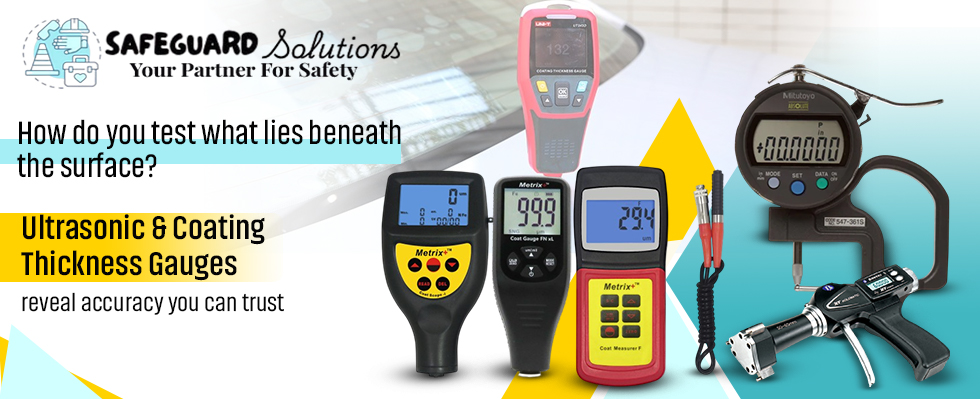
The Science Of Accuracy – Thickness And Bore Gauges Enhancing Industrial Performance
Whether you’re working in an inspection lab or a full-fledged modern industrial floor, there’s no alternative to accurate measurements. You need instruments that can turn invisible data into decisions and ensure all systems are working reliably.
Having an advanced measurement tool thus becomes non-negotiable. It can be a thickness determining device, a coating measurement tool, or a bore gauge. When you’re applying coatings, machining components, or inspecting bores and internal diameters, the right instrument makes all the difference.
At Safeguard, we acknowledge this basic need of every production floor or inspection lab. Three essential instrument families – bore gauges, thickness and coating measurement gauges – can be your answer to accuracy-related issues in a wide range of applications. Let’s tell you how.
1. Coating Thickness Gauges To Measure And Protect
Let’s say you are measuring the dry film thickness of a coating, paint, epoxy or plating of a metal instrument. With the help of our thickness gauges, you can ensure if the particular layer is within the standard specifications. If the coat is too thin, it won’t be enough to protect the material, and if it’s too thick, it can erode with time, exposing the material to corrosion.
Our coating gauges can determine ASTM compliance and other regulatory standards across surfaces that need maximum protection. With proper data logging features, you can repeat tests and check coatings regularly to mark deviations, if any.
Key applications of our coating thickness gauges:
- Automobile industry: Check thickness of car paints to determine the right finish.
- Oil and gas - Detect corrosions by measuring coatings on pipelines and storage tanks.
- Marine industry - Track and monitor anti-rust coatings on ship parts and containers
- Manufacturing units - Determine quality of coatings on important products, like home appliances, furniture and tools.
- Construction sectors - Check the layers of protective paints on steel beams and bridges.
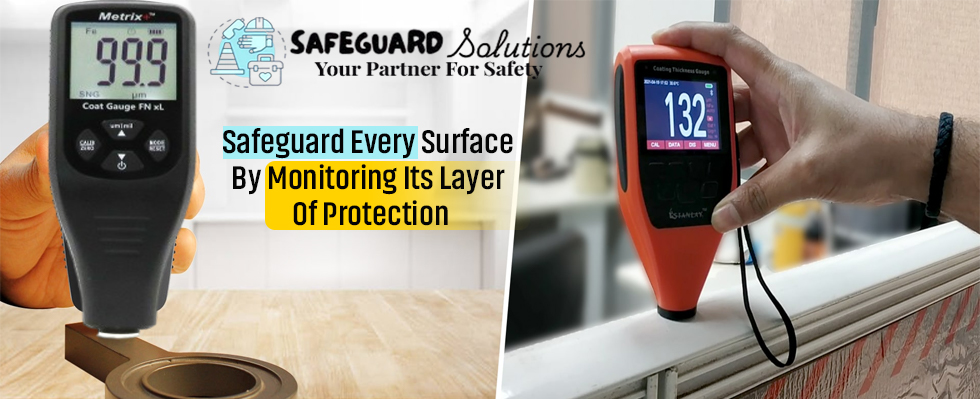
The value of the global coating thickness gauge market currently stands at $662 million and is expected to grow at a CAGR of 6.4% in the next 12 years. The Asia-Pacific region, including India, is an essential contributor to this growth, because of the constant expansion of automobile, electronic and manufacturing sectors.
You already know how essential coatings are. With Safeguard, now you have access to an advanced coating thickness gauge to ensure your equipment and products have the perfect coating, complying with industry standards. Our gauges are ideal for both production and lab floors, where precise coating takes the front seat.
2. Ultrasonic Thickness Gauge To Detect Damages
Measuring the thickness of any material helps us determine if it has been corroded from the inside. Nothing can be better if we can do that with cutting or drilling, that is, in a non-destructive manner. And our ultrasonic thickness gauge does exactly that.
By sending sound waves through a probe into the material to be measured, you can collect raw data on its current thickness and compare it with the standard specifications. If the material appears thinner than expected, chances are, it’s getting corroded from the inside due to age or exposure to harmful substances. The necessary steps can be taken then to prevent the instrument from damage.
Where it can be useful:
- Oil, gas and utility facilities - Walls of old pipes get corroded due to chemical and other exposure. Checking their thickness can prevent leaks.
- Industrial units - Boilers, tanks and pressure vessels are subjected to wear over time. Checking their thickness can keep them in performing conditions.
- Shipbuilding - Sea-water leads to corrosion of metal plates underwater. Measuring the thickness regularly can prevent major damages.
- Power Plants - Monitoring the thickness of heat exchanges and steam lines regularly and accurately can help maintain performance.
- Construction sectors - Checking for weaknesses in steel rods and bridges can reduce the chance of major accidents.
Staying prepared for unfortunate incidents is one thing. But ensuring preparedness with the right instruments goes a long way to enhance performance. And that’s exactly what our thickness measuring gauges aim to achieve.
3. Bore Gauges To Ensure The Right Size And Diameter
Suppose you are an inspection engineer at a utility facility. You are likely to deal with several instruments working under constant stress and consistent pressure. You have the responsibility to see that every system, from pumps, fittings to turbine and valve assemblies are perfectly aligned with each other to ensure optimal performance.
But it’s easier said than done, and you know it pretty well. Even a minor reading error can misinterpret dimensions leading to leakages, failure or complete shutdown of a pipe system.
That’s why we have the bore gauges. It’s indispensable in measuring the internal diameter of pipes, holes and other cylindrical parts with exceptional accuracy. Unlike external measurement tools, a bore gauge allows you to look “inside” the system and confirm if the hole meets the required tolerance standards, or if there’s any sign of wear already.
Where our bore gauges can be of effective use:
- Energy and utility facilities - Accurate inspection of pump housings, turbine casings, and valve bores in water treatment and power generation.
- Aerospace - Measuring internal diameters of landing gear and hydraulic systems and ensuring tight tolerances.
- Automobile industry - Engine cylinder bores, valve seats, crankshaft housings require dimensional accuracy, which can be ensured by bore gauges.
- Tool shops and color making - Confirming if moulds and dies have consistent cavity depths and proper contours.
- Maintenance workshops - Pipes, industrial valves, hydraulic cylinders and pumps need to be checked for the required dimensions.
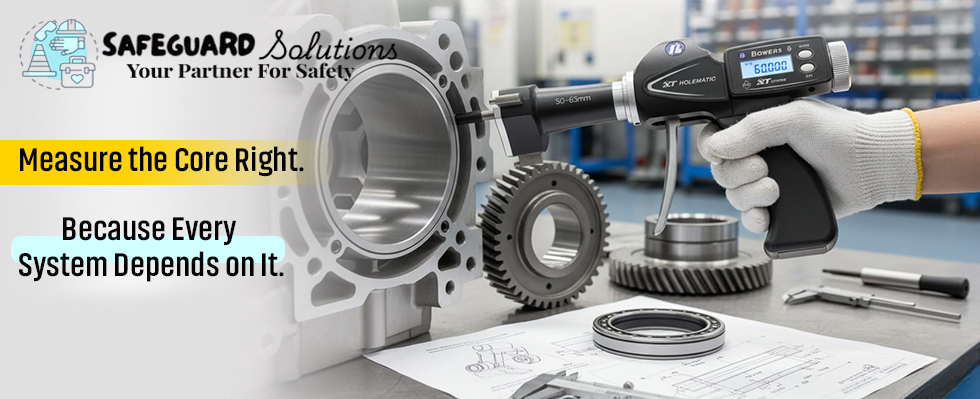
Bore gauges are in high demand these days, both across the country and beyond. The global bore gauge market value ranges from $814-$882 million with CAGR around 8.2%-8.4%. The reason for this immense growth is high-precision machining in aerospace, automobile and manufacturing industries, besides utility.
Finally…
Whether you are working in a utility, manufacturing setup, or a full-fledged industrial unit, these three instruments are indispensable in conforming to the compliance standards. Even the smallest variations in readings can halt entire batches or bring the unit to an emergency shutdown. If issues are neglected for a long time, damages caused by corrosion or wear can even cause accidents.
To prevent all of these, use these simple yet highly-advanced tools to enhance industrial performance. We have many more in our stock and we can arrange for specialised instruments on request. Just let us know what you need. You handle the functions, we are ready to handle all precise measurements.
Categories
Recent Posts
- Power Tools That Safeguard Real Metal Fabrication Works
- JHM Galaxy Glue: The Best Choice In Industrial Adhesives Right Now
- Start 2026 With These Industrial Equipment For Compliance And Competitive Edge
- 10 Industrial Safety Products Your Workers Need For Protection And Compliance
- How Size Control Ring Gauges Still Hold Importance In Smarter Factories


